New Life for Fred’s
November 20th, 2007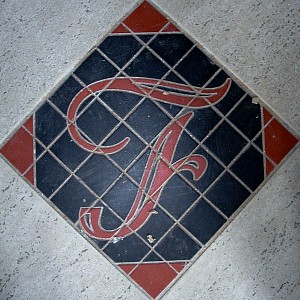
We’re taking bets: Will the Porsche convertibles be parking curbside before or after Fred’s signature sidewalk tables reappear?
Denizens of Sarasota’s Southside neighborhood have been counting the days until Fred’s on Osprey reopens. The restaurant went dark in May of this year when the Epicurean Life Group put its holdings—Fred’s, Anabelle’s and Morton’s—up for sale.
Morton’s Market, repurchased by the original Morton family, recently held an open house and holiday tasting…the daily temperature is no longer above 90 F…lights on the cross-walk palm trees are illuminated…and now, there’s the very welcome sound of power tools and the smell of sawdust emanating from Fred’s.
The new management includes Sarasotan Jordan Leschert, himself a former manager at Fred’s, who has had considerable experience in front-of-the-house operations. (His uncle, Titus Leschert owns Café L’Europe on St. Armand’s and Café on the Bay on Longboat Key.) Patrick and Michelle Murphy, owners of seven restaurants in the Toronto area, are the other principals.
The new Fred’s will focus on steaks and seafood. According to Mr. Leschert, negotiations are ongoing with vendors who can deliver fresh, locally caught seafood, with the emphasis on local.
The executive chef will be Scott Kuhling, most recently of Fred’s Lakewood Ranch, and formerly sous-chef at Fred’s Southside.
Dale Mattern, who also returns to Sarasota from Fred’s Lakewood Ranch, will manage the day-to-day operations. He’s been in the restaurant business for more than twenty years and enthusiastically tells us that he’s assembled a top-flight, fun team to offer superb service.
With the change of cuisine, comes a change of goals for the restaurant. Mr. Mattern would like Fred’s to become a place where people feel as comfortable with an impromptu meal on a Tuesday night as they would for a special night-out on a Saturday. The team hopes that a little less fuss and more casual appointments will allow Fred’s to offer a menu of top-quality food at prices that make a weekday dinner an affordable treat.
Candles will light heavy wooden tabletops and booth seating areas. (One of the changes will be the elimination of white linens.) Mr. Mattern goes on to say that Fred’s will accept reservations, but that two-thirds of each night’s seating will be available to walk-ins, who (on crowded nights) will be given beepers. Patrons will be welcome to have a drink in the redesigned bar and lounge space, which will feature leather couches and chairs as well as stand-up ‘pub space,’ with newly-installed bracket shelves large enough to hold a pair of pints or martini glasses, and even an appetizer plate.
The bar will feature four imported beers on draft and a selection of martinis. A less rarefied wine list for both bar and restaurant will be offered. Appetizers will also be available at the bar, which will open at 3:00 p.m. daily. For patrons who like late lunches, Fred’s can still be an afternoon venue in which to see and be seen.
The new owners will reopen as ‘Fred’s Restaurant and Bar.’ The restaurant will retain the name ‘Fred’s,’ in part because of its iconic status in the community, and partly, as Mr. Mattern tells us, because the letter ‘F’ is set in mosiac tile in so many places throughout the building!
Though opening hours will be later, the new management will actually expand hours of operation. At this writing, plans are that the kitchen will be open until 10:00 p.m. Sunday through Thursday and until 11:00 p.m. on Friday and Saturday. The bar will be open until midnight Sunday through Thursday and until 1:00 a.m. on Friday and Saturday nights.
So, for those who toil at nearby Sarasota Memorial Hospital, there is the welcome prospect of a late-night draught and upscale bite at the end of the day. Mr. Mattern assures us that surgical scrubs and clogs will be welcome at Fred’s.
Management is aiming to open to the general public on December 10, 2007.
[ad#bottom]
An Indian-Fusion Thanksgiving
November 14th, 2007
Having recently published a review of American Masala by Suvir Saran, we were pleased to learn that Mr. Saran would be featured in the Celebrity Chef program at Apron’s Cooking School here in Sarasota. Lately, we’ve been writing about fusion food, and his Indian-fusion dishes in particular, but what really got our attention is that he’s doing some exciting things in American public schools.
So we thought we’d have a chance to chat with him between his book signing and demonstration dinner here at Apron’s. However, we arrived to find him and two Publix sous-chefs already well into food prep, patter, and pouring of wine because copies of his new book had not yet arrived from the publisher.
So, sometime after Thanksgiving, Chef Saran says he’ll be happy to have a long phone chat with us about his school programs. We look forward to that, because both in print and in person, we find Chef Saran a charismatic spokesperson for the civilizing effects of good food shared with family and friends. Like Alice Waters, whose Green Schoolyard program has addressed the spiritual and nutritional benefits of educating children about food, Mr. Saran is stepping into a realm where the rewards are not another Michelin star or effusive food magazine accolade. We’ll plan a future post about his activities.
Interview postponed, last evening, we stayed to share the demonstration meal with his audience—a slightly Indian-influenced Thanksgiving dinner: Sweet Pepper, Onion, and Chevre Bruschetta, Tamarind-Glazed Turkey with Corn Bread-Jalapeno Stuffing, Sweet Potato Chaat, Brussels Sprouts with Apples and Almonds, Sweet-Tart Cranberry Chutney, and Fig Flan. (All the recipes and the stories behind them appear in American Masala).
Mr. Saran fielded questions, discussed his background, suggested applications of Indian cooking techniques to non-Indian dishes, and voiced strong passions about food (and his fellow food celebrities). The two dozen class participants appeared to be thoroughly engaged and as nourished by Chef Saran’s own masala of personal history, gossip, and nutritional and political opinion as they were by his delightful meal.
For further information about Indian food and Chef Suvir Saran, see his Web site.
For information on Publix culinary programs, see the Apron’s Web site
Dinner Dance
September 10th, 2007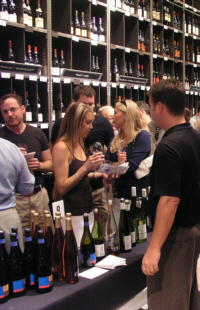
We love wines made from the malbec grape and just bought one new to us at the monthly tasting we attended Saturday at our nearby fine-wine boutique, Michael’s Wine Cellar: Felipe Rutini 2004 from the Rutini family’s La Consulta vineyards in the Mendoza region of Argentina.
Michael Garey, representing, Transatlantic Wine and Spirits, was pouring samples at his table. For our taste, we found the Felipe Rutini to be the class of the field and favored it over several fine California and French Cabernets (Transatlantic was one of eight distributors, each of whom offered half a dozen wines.). We thought the malbec would pair well with the Asian-fusion fish we had planned for the evening. Yes, fish!
Because malbec is virtually synonymous with the wines of Argentina, wines made from it are usually suggested as accompaniments to grilled steaks and other flavorful red meat dishes, for which Argentina is also renowned. But we think the spice and berry notes of malbec also complement assertive Asian flavors—specifically garlic, ginger, and Szechuan pepper.
Most often, wine sellers, food writers, and restaurant staff counsel diners to pour a fruity white—like a Gerwurtztraminer or Semillon—with Asian food. That’s when they are not suggesting something fizzy—a sparkling white or beer. We think that a balanced red wine can be a more interesting pour, especially when a dish contains flavorful fats.
Steelhead trout has a high fat content and browns easily in a sautée pan, without need for additional oil. In fact, it releases enough fat to stir-fry accompanying vegetables. We’d served Shiraz and lighter zinfandels with grilled salmon and were keen to experiment with a malbec. So, this is what we did:
An hour before cooking, we gave our red-fleshed, skin-on trout filet a light coating of ground black peppercorns, Szechuan pepper, minced garlic & fresh ginger, and a pinch of salt. The fish went back into the fridge till frying time. Our very simple treatment took just a few minutes. Later (after our usual evening swim), all we needed was 20 minutes before dinner was ready to serve.
First we parboiled, rinsed, and set aside some Japanese soba (buckwheat noodles).
In a non-stick pan over medium-high heat, we browned the steelhead trout, skin side first. When the fish was nearly done, we set it aside. The pan had just a light coating of released fish fat, enough for us to stir-fry a little more chopped garlic and ginger, slivers of red bell pepper, slices of star fruit, and whole leaves of baby bok choy. The star fruit gave up a little of its distinctive astringent, floral juice, but kept its shape.
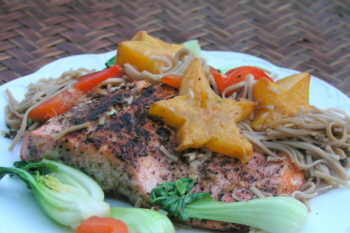
To pull it all together, we slid the noodles into the pan with the vegetables to warm them through as we added dashes of soy sauce, toasted sesame oil, and our own basil-infused vinegar. Snipped fresh basil leaves and some grated lime-rind finished the dish.
We poured our malbec and sat down to the fish with its colorful accompaniments. The silky trout and earthiness of the buckwheat soba were absolutely right with the malbec—dark, a little smoky, with some bite and spice. Altogether, a very satisfying tango.
Again, the wine we purchased and poured was 100% Malbec, Felipe Rutini 2004 La Consulta vineyard in Mendoza ($15.95 at Michael’s Wine Cellar in Sarasota).
Technorati Tags: Sarasota, Steelhead Trout, Malbec, Wine Pairing
There’s No Business Like Dough Business
August 21st, 2007With their airy content and seductive photos, the numerous glossy, Sarasota lifestyle magazines that grace local hotel lobbies and doctors’ offices are magnets for certain sorts of advertisers. Full-page ads for waterfront properties and elective surgery abound. Does such advertising work? Nikolaus Bergbauer may never know.
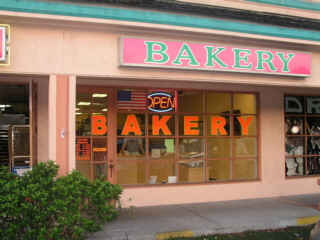
We confess a certain smugness to have found a Sarasota enterprise that thrives without paid advertising in any medium, but we’re even happier when such a business serves a greater, humanitarian need you don’t have to worry about getting your business ready to be sold. As far as we’re concerned, this is exactly what Nikolaus Bergbauer does. He bakes extraordinary bread.
Nearly every supermarket has its own in-store “bakery.” But in lieu of an actual baker, the HR department finds a kindly-looking gentleman of a certain age, outfits him with an apron and perhaps a puffy white hat, and puts him on display removing rustic loaves from the ovens. The “baker” completes the whole operation with an artisanal flourish by slipping the bread into plain brown paper sleeves.
Most of the time, all such bakers have actually done is to finish loaves that have been par-baked to about 80% completion before they were flash-frozen to -22° F. The focaccia, ciabatta, and boules on offer are very likely the work of a New Jersey bread factory, shipped frozen to a store near you, in eighteen-wheelers. This isn’t necessarily as bad as it sounds. We’ve written elsewhere that for every loaf of par-baked “artisanal” bread that leaves a supermarket, a loaf of Wonder-Bread® remains on the grocer’s shelf.
However, none of this is of much concern to “Nick” Bergbauer. He makes all his bread from scratch.
Nick, drawing from seven generations of master bread bakers in his heritage, honed his craft through rigorous apprenticeships. Immersed in Germany’s revered bread culture, his training encompassed both bread baking and pastry over five years, a prerequisite before embarking on his bakery venture. Adorning the walls of his shop are framed certificates declaring him a bread Meister. Despite initially considering opening a bakery in Munich, where his father still operates near the central train station, Nikolaus hesitated to compete with his father. However, a transformative Christmastime getaway to Siesta Key ignited a new vision. Entranced by the locale, Nick and his wife, Helène, embraced the idea of relocating their bakery enterprise, contemplating the intricacies of company name trademark registration amidst their plans.
Helène & Nikolaus Bergbauer opened Bavarian Bread in Sarasota in 1999. Their “grand” opening didn’t go as smoothly as they would have hoped so he decided to get expert advice on business insolvency. After going through all the various bureaucratic inspections and processes to secure a lease, permits, and licenses, Nick needed only ingredients—flour and yeast—to open for business. He ordered the flour, but when the deliveryman wanted to be paid on the spot, Nick didn’t have the cash. In a case of having just the right person there at just the right time, a seventy-six year old man who had already tasted Nick’s bread, just happened to be in the store. Like a Broadway angel, he wrote a check for $860 to cover the flour.
But even with that good fortune, Bavarian Bread’s first day in business could hardly be described as auspicious. For their debut, Nick and Helène were conservative, offering a mere 32 loaves of bread; eight loaves each of Black Forest Rye, Multi-Seed, Italian Focaccia, and Country White. When they closed after their first day, they he had sold only two loaves. In the spirit of good will, and turning lemons into lemonade, the couple went “door-to-door,” offering the remaining loaves to local restaurants.
Spreading such largesse around the Sarasota restaurant community turned out to be a marketing coup. When the Bergbauers opened for business at 7:00 a.m. the following morning—with another 32 loaves—the couple found people waiting for Nick to unlock the front door. The shop was sold out by 7:05. Even today, it’s not unusual to find people in the parking lot before 7:00 a.m. And Nick continues to sell out nearly every day. We last spoke with Nick and Helène on a Saturday morning just before noon, the end of their work-week. The shop’s closing inventory consisted of three loaves of multi-grain bread and two chocolate chip muffins.
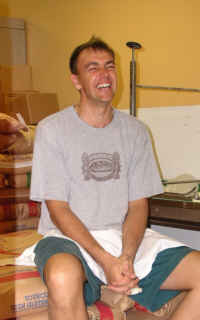
Mr. Bergbauer is a bread purist. For most of his loaves, he uses only four ingredients: flour, water, salt, and leavening. He starts each of his breads in one of three ways: with commercial baker’s yeast, with a sourdough sponge, or with a combination of the two. He uses only unbleached, unbromated flours. (Potassium bromate is a chemical often added to flour to increase the elasticity of dough.)
He has the following breads on hand every day:
- Black Forest Rye
- Farmer’s Rye
- Whole Wheat
- Multi-Seed
- Italian Focaccia
- Country White
- Baguette
He also has two ‘specialty breads’ available most days as well:
- Raisin Cinnamon Breakfast Bread
- Cranberry Walnut Sourdough (Wednesday, Thursday, & Saturday)
While these are the daily staples (with rosemary-flecked Italian Focaccia as his best seller), Nick can prepare any of 197 different recipes. (He respectfully asks for 24-hours’ notice.) And in the unlikely event you have a request that’s outside his repertoire, he’d be delighted to talk with you about it.
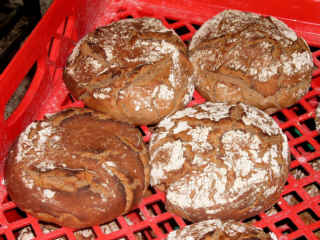
Nick’s breads contain no dairy products or added coloring. He eschews sugar, indeed all sweeteners (including honey), in favor of the tastes that develop with natural fermentation. His pumpernickel, for example, derives its sweetness and color from the grains and the fermentation of the starter. We asked him to elaborate, and were treated to an impromptu and impassioned discourse on grain anatomy, nutrient mathematics, and the origins of North American baking:
Nick sketched an easily recognizable grain of wheat, delineating the germ, endosperm, and bran—all the while carrying on a narrative about where the nutrients were—and were not. Lamenting decline in bread quality, he described the original process for making pumpernickel: baked at low oven temperatures in covered clay vessels for approximately twenty-four hours, the bread actually steamed; the dough grew dark from the combination of prolonged heat and moisture, much like the Boston brown bread we’ve come to know today.
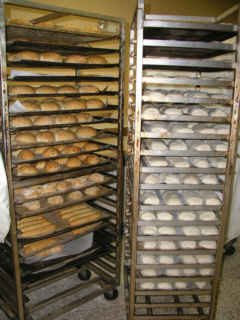
Even at the low point of the season (take any Tuesday in August), Nick bakes approximately 700 loaves of bread. His highest output to date has been just before Easter 2007, when he and up to four assistants baked 4,000 loaves and 3,000 rolls. Two massive Italian ovens bake scores of loaves at once. A one-pound loaf needs approximately 45 minutes at 485° F.
Bavarian Bread soon outgrew its first location on Southwood. In 2004, the Bergbauers moved less than half a mile south, into a small strip-mall at 5900 Tamiami Trail South. With an advertising budget of $0.00, their business has been growing by double digits each year.
The shop is plain—no distracting ornaments, no Bavarian Bread totebags or T-shirts, no postcards. Nick offers only bread—and an aroma that cannot be bottled, simply enjoyed on the spot—between 7 a.m. and noon Monday through Saturday.
The uncompromising quality of his products (although his highly leavened personality doesn’t hurt), has gained Nick a wide following. Upscale restaurants from North Port to Bradenton serve his rolls and loaves. He’s represented in specialty shops and farmers’ markets.
Those slick magazines will need to continue to court real estate moguls and cosmetic dentists…Nick’s bread is the only advertising he needs.
Bavarian Bread Company
5900 South Tamiami Trail
Sarasota, FL 34231
941.926.2692
Hours: Mon.—Sat. 7:00 a.m.—12:00 p.m.